How AI Works: Introduction
Artificial Intelligence might sound complicated, but the truth is—AI works through simple concepts that anyone can understand. You don’t need technical knowledge or coding skills to learn the basics. This guide will help beginners understand how AI works, how machines “learn,” and how AI tools like ChatGPT, Gemini, or Midjourney think and respond.
If you’ve ever wondered:
✔ How does AI learn?
✔ How does AI understand text and images?
✔ How does AI make predictions?
✔ How do chatbots like ChatGPT work?
… then this beginner-friendly guide will give you the clarity you need.
Table of Contents
1. What Exactly Is AI?
AI (Artificial Intelligence) is a technology that allows machines to mimic human abilities such as:
- learning
- thinking
- understanding
- solving problems
- recognizing patterns
In simple words:
👉 AI = Machines that act smart.
AI does not have emotions, opinions, or human-style consciousness—it simply learns from data and follows patterns.
2. How Do Machines Learn? (The Simple Formula)
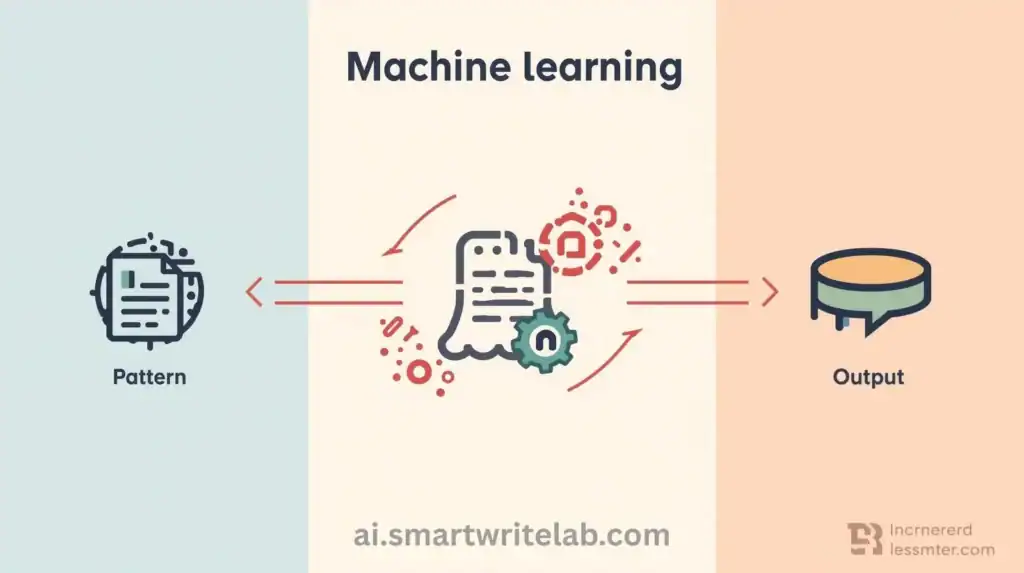
AI learning is based on a very easy principle:
AI learns by looking at examples.
Just like:
- A child learns alphabets by seeing them repeatedly
- A student learns math by solving problems
- A musician learns by listening and practicing
AI also learns using training data.
Example:
If you show an AI 10 million pictures of dogs, it eventually understands:
✔ Dogs have ears
✔ Dogs have eyes
✔ Dogs have fur
✔ Dogs have 4 legs
So next time AI sees a new picture, it can guess:
👉 “This is likely a dog.”
This process is called Machine Learning.
3. Types of AI Learning (Explained Simply)
1. Supervised Learning
AI learns from labeled examples.
Example:
Images are marked as “cat” or “dog.”
AI observes → AI learns → AI predicts.
This is like teaching a child with flashcards.
2. Unsupervised Learning
AI finds patterns on its own.
Example:
AI looks at thousands of customers and groups them by behavior.
No labels.
No instructions.
AI figures out patterns automatically.
3. Reinforcement Learning
AI learns by trial and error.
Example:
A robot tries walking.
Falls.
Learns.
Tries again.
Improves.
This is the same method used in:
- Robotics
- Games
- Self-driving cars
ChatGPT also uses reinforcement learning to improve responses.
4. What Are Neural Networks?
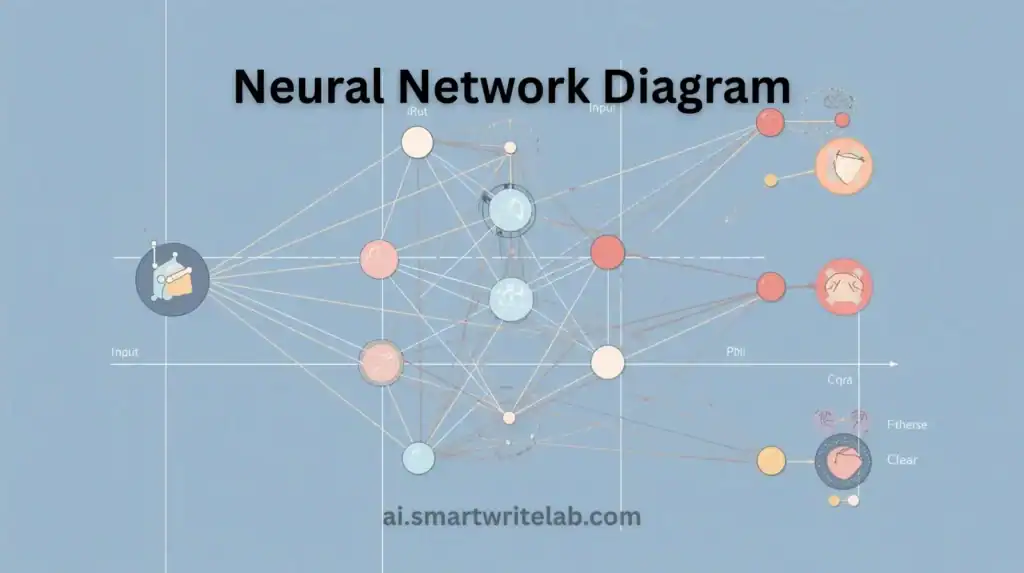
Neural Networks are AI models inspired by the structure of the human brain.
But don’t worry—this is simple.
Imagine:
👉 A big network of connected “nodes”
👉 Each node passes information to the next node
👉 Final output is a result of millions of calculations
This is how AI:
- recognizes faces
- understands voice
- writes text
- makes predictions
ChatGPT is based on a neural network architecture called Transformer, which specializes in:
✔ understanding text
✔ remembering context
✔ generating human-like responses
ChatGPT for Beginners: A Complete Guide

5. How Ai Works (ChatGPT Beginner Level)
ChatGPT works in three simple steps:
Step 1 — You give a prompt
Example:
“Explain gravity in simple words.”
Step 2 — AI analyzes your words
It identifies:
- Your question
- Intent
- Tone
- Context
Step 3 — AI generates the best possible response
It searches through patterns it learned during training and creates a natural answer.
ChatGPT is like:
👉 A super-fast assistant
👉 That has read millions of books
👉 And can answer almost anything
But it doesn’t “think” like a human.
It simply predicts the best next word.
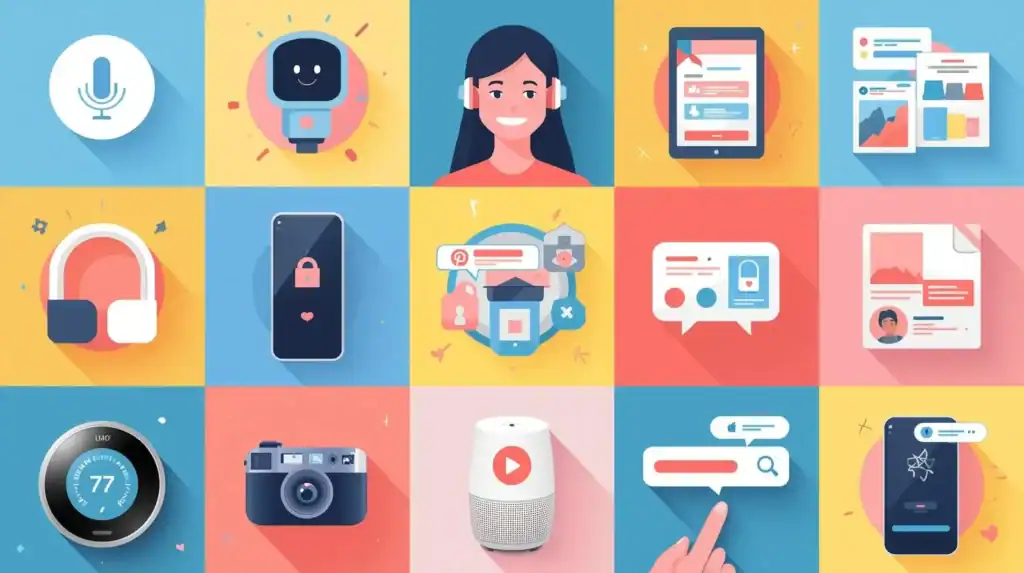
6. Where Do We Use AI in Daily Life?
AI is everywhere around us—even if we don’t notice it.
In your phone:
- Face unlock
- Voice assistant
- Keyboard auto-suggestions
On social media:
- Instagram recommendations
- YouTube suggested videos
- TikTok For You feed
On websites:
- Chatbots
- Smart search
- Product recommendations
In business:
- Automation
- Data analysis
- Customer behavior prediction
AI makes daily tasks faster and smarter.
7. Advantages of How AI Works for Beginners
✔ Saves Time
AI completes tasks in seconds.
✔ Improves Productivity
You get more work done with less effort.
✔ Helps with Learning
Students get better clarity and notes.
✔ Helps Creators Think Faster
More ideas, more content, less stress.
✔ Helps Businesses Grow
Better marketing, analysis, and customer support.
8. Common Myths Beginners Believe About AI
Myth 1 — AI will replace everyone
AI replaces tasks, not humans.
Humans with AI > Humans without AI.
Myth 2 — You need to be a coder
No.
Most modern AI tools need simple English instructions.
Myth 3 — AI is always accurate
No AI is perfect.
Always verify facts.
Myth 4 — AI is dangerous to use
Using AI tools like ChatGPT, Canva, Gemini etc. is completely safe.
9. How Ai Works for Beginners
Start with simple tasks
Notes, email writing, ideas, planning.
Use good prompts
Clear instructions = better output.
Learn one tool at a time
Start with ChatGPT → then Canva → then others.
Check the output
Always refine and fact-check.
Build a daily workflow
Use AI for writing, studying, content, scheduling, etc.

Conclusion
Artificial Intelligence isn’t complicated—it’s simply a system that learns from data and uses that learning to make decisions. For beginners, understanding how AI works is the first step toward using it confidently.
AI doesn’t replace people.
AI empowers people.
Start small → Experiment → Improve → Grow.
This is the future.
And you’re early.
FAQs
Q1. Is AI difficult to learn for beginners?
No. Modern AI tools are beginner-friendly.
Q2. Do I need money to use AI?
Most powerful tools have free versions.
Q3. Can students use AI safely?
Yes, for learning, notes, and explanations.
Q4. Which AI tool should beginners start with?
ChatGPT and Canva AI are the best starting points.










Hello! I could have sworn I’ve been to this website before but after browsing through some of the post
I realized it’s new to me. Anyways, I’m definitely glad I found it and
I’ll be bookmarking and checking back frequently!
Thank you! I’m glad you discovered the website.
If there’s any specific topic you’d like to read about, feel free to let me know — I’d love to create content that helps you.
Stay tuned for more updates!