Artificial intelligence has completely changed how bloggers create content. These days, many writers use AI tools to research topics, build outlines, and draft articles much faster than before. But here’s the important part: simply generating text with AI doesn’t guarantee your post will rank on Google.
To succeed, bloggers need to understand how to create SEO-friendly AI blog posts that are helpful, well-structured, and genuinely useful for readers.
Google’s Helpful Content System prioritizes content that actually helps people. If someone publishes AI-generated articles without editing or improving them, Google may treat that content as low quality.
However, when AI is used the right way, it can make the blogging process faster while still helping you create SEO-friendly AI blog posts that rank well and provide real value.
In this guide, you’ll learn a practical workflow bloggers use to create SEO-friendly AI blog posts while staying aligned with Google’s content guidelines.
Best AI Search Tool: A Complete Guide for Smarter & Faster Searching
Table of Contents
Why Many AI Blog Posts Don’t Rank
A lot of websites rush to publish AI-generated articles without thinking about search intent or content quality. Because of this, many of those posts never show up in search results.
Here are some common reasons why AI blog posts fail:
- Publishing raw AI content without editing
- Ignoring what users actually want to learn
- Repeating generic information found everywhere
- Not adding human insight or explanations
- Poor formatting and weak structure
AI should be treated as a helper, not a replacement for good writing. The best results usually come from combining AI assistance with human editing.
That’s the key to producing SEO-friendly AI blog posts that perform well in search.
Step 1: Start With Search Intent
Before writing any blog post, the first thing you should understand is search intent.
Search intent simply means understanding what someone wants to learn when they type a keyword into Google.
For example, when someone searches for SEO-friendly AI blog posts, they are probably looking for things like:
- How to write AI content that ranks on Google
- Ways to avoid low-quality AI articles
- SEO tips for AI-generated content
If your article answers these questions clearly, it’s much more likely to rank.
When bloggers ignore search intent, even well-written posts struggle to perform. That’s why understanding the reader’s goal is the foundation of creating SEO-friendly AI blog posts.
How to Use Midjourney AI Effectively (Beginner Workflow)
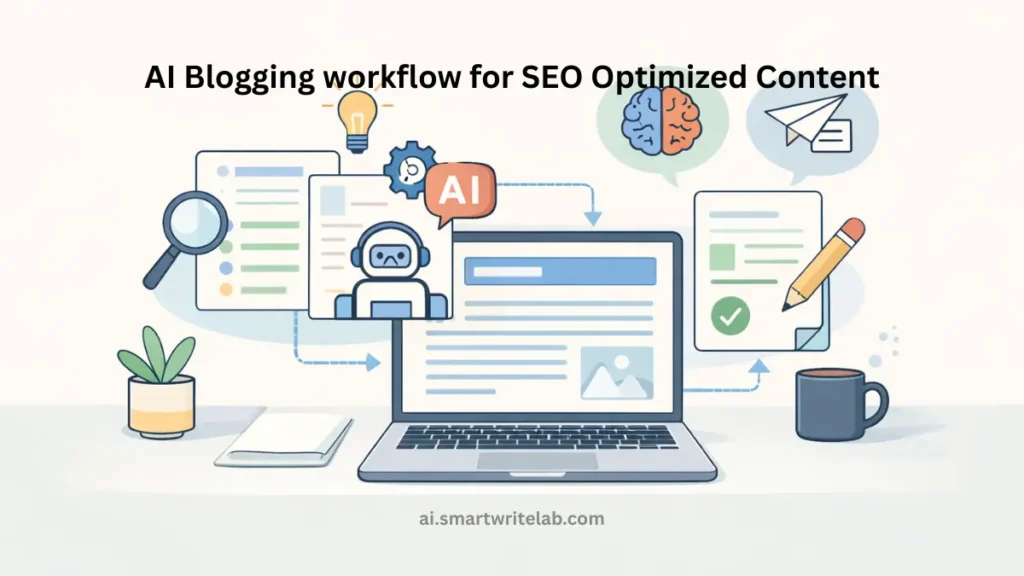
Step 2: Use AI for Research and Outlines
AI tools work best when they assist your workflow rather than replacing it entirely.
One of the most useful ways to use AI is during the research and planning stage.
For example, AI can help you:
- Brainstorm blog topic ideas
- Build a structured outline
- Suggest headings and subtopics
- Identify common questions readers ask
Once you have a strong outline, you can expand each section yourself and add useful explanations.
This approach helps turn a simple AI draft into SEO-friendly AI blog posts that actually provide value.
Step 3: Organize Your Blog With a Clear Structure
Both readers and search engines prefer content that is easy to follow.
When writing SEO-friendly AI blog posts, always organize the article in a clear and logical way.
A simple structure usually works best:
- Introduction
- Explanation of the problem
- Step-by-step solution
- Examples or tips
- Common mistakes
- FAQs
- Conclusion
Using headings like H1, H2, and H3 helps break the content into sections. It also makes the article easier to scan, which improves readability.
Well-organized articles naturally perform better as SEO-friendly AI blog posts.
Step 4: Add Real Insights and Examples
One major difference between low-quality AI content and useful content is human insight.
AI can generate text, but it doesn’t have real experience. That’s why adding explanations and examples is so important.
To improve your SEO-friendly AI blog posts, try including:
- Real blogging workflows
- Practical examples
- Clear step-by-step instructions
- Helpful tips readers can apply immediately
For instance, instead of just writing:
“Use alt text for images.”
You could explain it like this:
“Add descriptive alt text such as ‘workflow showing how bloggers create SEO-friendly AI blog posts using keyword research and editing.’”
Small details like this make your article more helpful and easier for readers to understand.
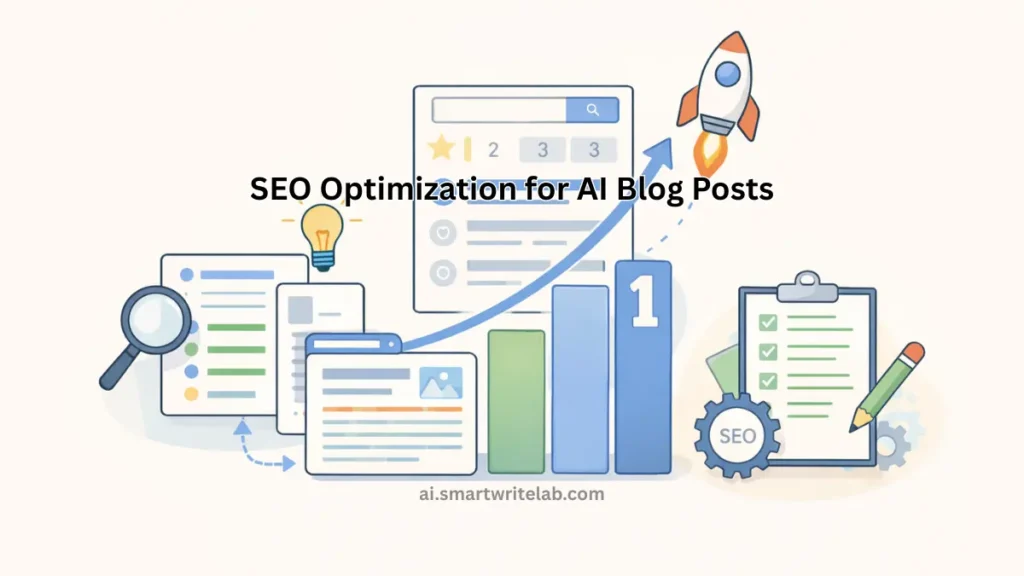
Step 5: Optimize Important On-Page SEO Elements
After writing your article, the next step is optimizing the key SEO elements.
Title Optimization
Your title should clearly include the main keyword.
Example:
How to Optimize AI Images for Google Rankings
A clear title helps both search engines and readers understand your content.
Step 6: Edit the AI Content Carefully
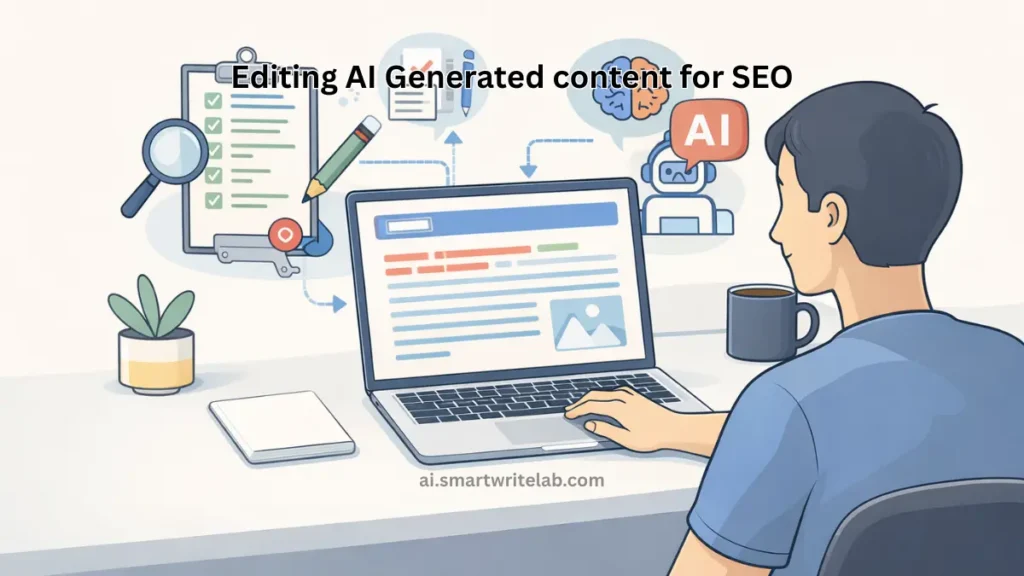
Editing is one of the most important steps in the entire process.
AI drafts often include repetitive phrases or overly generic explanations. Before publishing, review the article carefully and refine it.
Look for things like:
- Repetitive sentences
- Robotic or unnatural wording
- Missing examples
- Grammar issues
Rewrite sections that don’t sound natural. Even small edits can make a big difference.
Strong editing turns AI drafts into polished, SEO-friendly AI blog posts.
Step 7: Use Images to Improve Engagement
Images make blog posts easier to understand and more enjoyable to read.
They can also help with SEO when used properly.
Here are some simple best practices:
- Use images that support the content
- Choose descriptive file names
- Add clear alt text
- Compress images for faster loading
For example, you might include a diagram showing the workflow for creating SEO-friendly AI blog posts.
Visual content helps readers understand complex ideas faster.
Step 8: Focus on User Experience
User experience is becoming increasingly important for search rankings.
When creating SEO-friendly AI blog posts, keep the reading experience simple and clear.
Helpful improvements include:
- Short paragraphs
- Clear section headings
- Bullet points for easy reading
- Fast-loading pages
- Mobile-friendly formatting
When readers find your content easy to read, they stay longer on the page. That signals to search engines that your content is valuable.
Step 9: Avoid Low-Quality AI Blogging Practices
If you want your blog to grow, it’s important to avoid shortcuts that reduce quality.
Some practices that can hurt rankings include:
- Publishing fully automated articles
- Copying or rewriting other websites
- Creating many thin pages with little value
- Overusing keywords unnaturally
Instead, focus on producing SEO-friendly AI blog posts that genuinely help readers solve a problem.
Quality always beats quantity in the long run.
SEO-Friendly AI Blog Post Checklist
Before publishing your article, review this quick checklist:
✔ Clear search intent
✔ Focus keyword used naturally
✔ Human editing completed
✔ Proper heading structure
✔ Internal links added
✔ Images optimized
✔ Useful examples included
Following these steps will help ensure your content becomes strong, SEO-friendly AI blog posts that meet Google’s quality standards.
How to Use Canva AI Effectively (Step-by-Step Tutorial for Beginners)
Final Thoughts
AI tools can make blogging much faster, but ranking on Google still depends on content quality.
Bloggers who focus on search intent, good structure, proper editing, and SEO optimization can successfully create SEO-friendly AI blog posts that perform well in search results.
When AI is used carefully and combined with human insight, it becomes a powerful tool for producing useful and engaging content.
AI can assist with writing, but great content always comes from thoughtful direction and careful optimization.
FAQs
Are AI-generated blog posts allowed by Google?
Yes. Google allows AI-assisted content as long as the article provides useful and original information for readers.
Can SEO-friendly AI blog posts rank on Google?
Yes. When AI content is properly edited, structured, and optimized, it can rank just like any other blog post.
Should AI write entire articles automatically?
AI can help with research and drafting, but human editing is still essential. The best SEO-friendly AI blog posts combine AI assistance with human expertise.
What length works best for SEO-friendly AI blog posts?
There isn’t a fixed word count, but articles between 1000 and 1500 words often perform well when they provide helpful information.